
The Mistake: Assuming No Freeze Means No Prep
The most common mistake homeowners here make this time of year is doing nothing at all. It's an understandable instinct. Up north, "winterizing" means draining pipes and insulating against ice. In Madeira Beach, the temperature barely dips below the 50s most nights, so the whole idea of seasonal garage door care feels irrelevant. Hurricane season is winding down, the afternoon downpours start to ease up, and it's tempting to just close the garage and stop thinking about it until something breaks.
The problem is that your garage door doesn't care that it's not snowing. It's spent months absorbing salt air, humidity, and the stress of wind-load cycling during storm season. As the air turns drier and cooler heading into late fall and winter, those stresses show up in new ways: metal that swelled now contracts, lubricant that worked fine in thick humid air gets stiff, and small rust spots that were hiding under moisture become visible and start flaking. Skipping the checkup doesn't save you work later, it just trades a 20-minute inspection now for a stuck or off-track door in January.
What Actually Changes This Time of Year on the Gulf Coast
Madeira Beach doesn't get a true winter, but it does get a real shift in conditions that affects garage door hardware:
- Lower humidity after the wet season can shrink wood panels and weatherstripping that swelled over the summer, leaving gaps where before there were tight seals.
- Cooler nights and bigger day-to-night temperature swings make steel springs and tracks contract slightly, which can turn a door that was "a little noisy" into one that binds or sticks.
- Salt air exposure doesn't stop just because storm season is ending. Coastal corrosion on springs, hinges, and tracks is a year-round process, and the drier months make surface rust easier to spot, so this is a good time to catch it.
- Grit and sand from hurricane-season storms often settle into tracks and rollers and get packed in further once things dry out, which is a common cause of grinding noises and rough movement.
A Practical Fall Checklist
1. Test the balance
Disconnect the opener, lift the door halfway by hand, and let go. It should stay roughly in place. If it drops or shoots up, the springs are compensating poorly for the door's weight, often a sign of spring wear that's about to get worse as temperatures cool further.
2. Inspect springs and cables closely
Look for gaps in the coils, rust streaks, or fraying at the cable ends. Springs and cables under tension are not a DIY repair, the stored energy can cause serious injury, but spotting a problem early means a scheduled fix instead of an emergency one.
3. Clear and lubricate the tracks and rollers
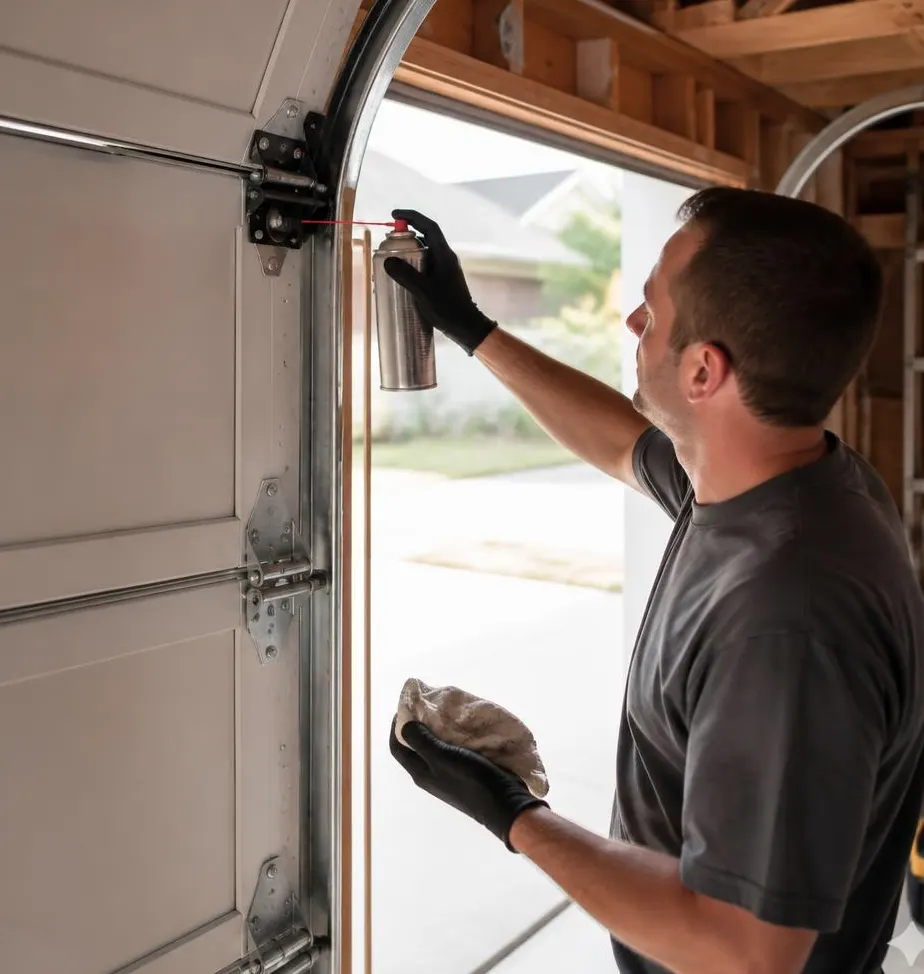
Wipe out any sand or salt residue, then apply a silicone-based lubricant (avoid WD-40 as a long-term lubricant near the coast since it attracts grit) to rollers, hinges, and the torsion spring itself.
4. Check weatherstripping and seals
Run a hand along the bottom seal and side weatherstripping. If it's cracked, brittle, or pulling away after the summer's humidity, now is the time to replace it before cooler, drier air makes gaps more noticeable and lets in drafts or pests.
5. Test the opener and safety sensors
Wipe down the photo-eye sensors near the floor, make sure nothing blocks their line of sight, and test the auto-reverse function by placing a block of wood in the door's path. Openers that have run all summer in heat and humidity sometimes develop sensor misalignment that's easy to miss until the door starts reversing unexpectedly.
6. Look over panels for rust or swelling
Coastal moisture can cause steel panels to rust at the seams or wood composite panels to swell and warp. Small rust spots caught now are a quick fix; left alone through another wet season, they can spread and weaken the panel.
When to Call Madeira Beach Garage Door
If the balance test fails, a cable looks frayed, or the door is grinding, sticking, or reversing on its own, that's the point to call in a professional rather than keep adjusting things yourself. Our Preventive Maintenance & Tune-Up service covers the full checklist above, including lubrication, hardware tightening, and a balance and safety sensor check, so small issues get caught before they turn into a stuck door on a weekend. If a spring is already showing wear or has failed, our Garage Door Spring Repair service gets it replaced safely and matched to your door's weight and size, which matters more than people expect once temperature swings start affecting tension.
If your garage door needs attention before the season changes, call Madeira Beach Garage Door. We serve Madeira Beach, Treasure Island, Redington Beach, Redington Shores, Indian Rocks Beach, St. Pete Beach, Seminole, and Largo, and we can usually get a technician out the same day.